“Now, organizations across North America are resuscitating the practice of Indigenous doulas. They’re training them to offer culturally safe, emotional and physical care, relying on traditional knowledge and reestablishing their place in the health care system: by the sides of Indigenous birthing women, where today’s doulas say they were always meant to be.” Read more below!
Indigenous doulas are helping Native moms take back their health after centuries of discrimination
Indigenous doulas helping Native moms take back their health after centuries of discrimination
National Indian Health Board Tribal Prenatal-to-Three Policy Agenda
The National Indian Health Board developed the Tribal Prenatal-to-Three Policy Agenda to raise
awareness regarding the most impactful and culturally appropriate policy levers and strategies
to support American Indian and Alaska Native (AI/AN) health and wellbeing in the earliest years
of life, from the prenatal period through age 3. These recommendations chart a path forward to
health equity and improved outcomes for AI/AN families, infants, and toddlers.
2024 Tribal Prenatal-To-Three Policy Agenda



2025-2026 GHWIC Registration Links
Funding for this was made possible (in part) by the Centers for Disease Control and Prevention. The views expressed in written materials or publications and by speakers and moderators do not necessarily reflect the official policies of the Department of Health and Human Services, nor does the mention of trade names, commercial practices, or organizations imply endorsement by the U.S. government.
Year 2 Project Schedule for ITCA GHWIC Subawardees (09/30/2025 – 09/29/2026)
(Click on image to download the PDF file)
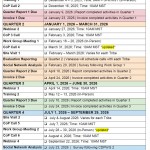
2025-2026 registration links can be accessed below.
COMMUNITY OF PRACTICE (CoP) CALLS
ITCA Health Promotion Specialist will send Tribal Site Coordinators the registration link directly.
CoP Call 1 - November 4, 2025 at 10:00 AM Mountain Standard Time (MST)
- Co-Presenters: Quechan Tribe & Elko Band of Te-Moak Tribe of Western Shoshone
CoP Call 2 – December 16, 2025 *updated date* at 10:00 AM MST
- Co-Presenters: Gila River Indian Community & Yavapai-Apache Nation
CoP Call 3 – February 3, 2026 at 10:00 AM MST
- Co-Presenters: Hopi Tribe & Pyramid Lake Paiute Tribe
CoP Call 4 – March 31, 2026 at 10:00 AM MST *updated*
- Co-Presenters: San Juan Southern Paiute Tribe & Inter-Tribal Council of Nevada with Ft. McDermitt Paiute and Shoshone Tribe
CoP Call 5 - July 7, 2026 at 10:00 AM MST
- Co-Presenters: Hualapai Tribe & Ute Indian Tribe
CoP Call 6 - August 4, 2026 at 10:00 AM MST
- Co-Presenters: Tonto Apache Tribe & Battle Mountain Band of Te-Moak Tribe of Western Shoshone
WEBINARS
Webinar 3
- Presenters: Subawardee(s) from the California IHS Area
- Date: April 14, 2026
- Time: 10:00 AM MST
- Registration: https://itcaonline.zoom.us/meeting/register/QX_qaObNRgu4CsbvY216aw
Webinar 4 – “Year 2 Closeout & Year 3 Overview”
- Presenters: Inter Tribal Council of Arizona, Inc.
- Date: September 22, 2026
- Time: 10:00 AM MST
- Registration: https://itcaonline.zoom.us/meeting/register/rVKgUBrvTcOEkaZZHnos7Q
GHWIC WORK GROUPS (in-person)
GHWIC Work Group 1 – “Tribal Food Sovereignty”
Dates: February 18 – 20, 2026
- Day 1: 8am – 4pm
- Day 2: 8am – 4pm
- Day 3: 8am – Noon
- Registration required: Click here – Registration Form
- Draft agenda: Click here – Draft agenda
- Hotel booking link – Click here – hotel booking link
- NOTE: Hotel block ends on Tuesday, February 3, 2026
GHWIC Work Group 2
Dates: July 28-30, 2026 *updated*
- Times: 8am – 4pm
- Registration: TBA
TRAININGS (in-person)
Training 2
Dates: May 12 – 13, 2026
- Times: 8am – 4pm
- Registration: TBA
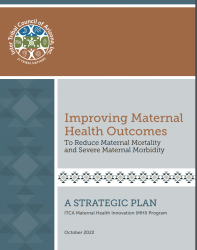
MHI Tribal Maternal Health Strategic Plan

In 2020, the Inter Tribal Council of Arizona, Inc. (ITCA), was contracted by the Arizona Department of Health Services (ADHS) to develop a strategic plan in collaboration with tribal maternal health professionals. The Maternal Health Innovation program is funded nationally by HRSA and is designed to assist states in collaborating with maternal health experts and optimizing resources to implement state-specific actions that address disparities in maternal health and improve maternal health outcomes.
Program Purpose:
The purpose of the Maternal Health Innovation Program is to reduce maternal mortality and morbidity in American Indian communities in Arizona.
MHI Program Goals
- Improve maternal mortality and morbidity in Tribal communities
- Improve access to maternal health data surveillance
- Improve maternal health partnerships between tribal communities and the state
Recorded Webinars
Missed a webinar? Check them out below along with any accompanied resources Webinar Toolkits and Workbooks.
Strategies and tools on using, collecting, and evaluating data through an indigenous lens.


ACEs, Historical Trauma and Emotional Wellness information and strategies.


Maternal health information on perinatal and postpartum care.


Holistic and indigenized approaches to birthwork.
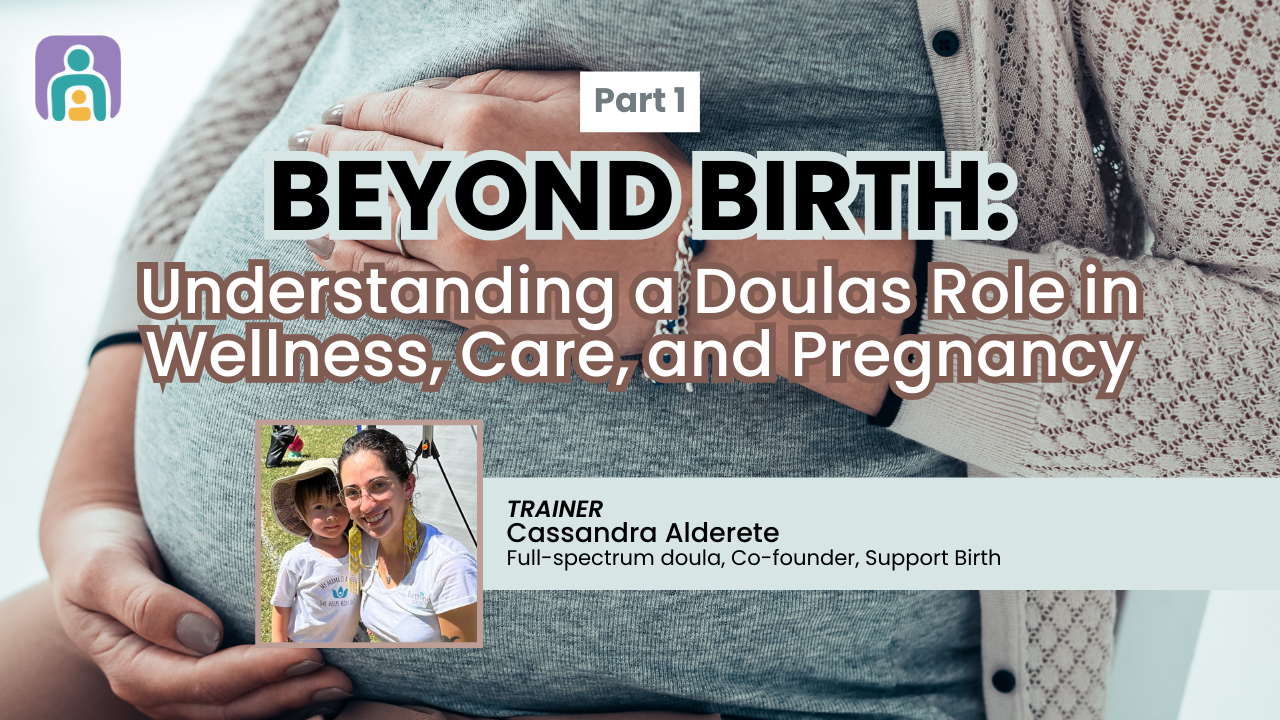


Resources meant for all birthing people and community members with accompanying toolkits/workbooks.


Understand how epigenetics affects indigenous communities and maternal health outcomes.


Pathway 2 Wellness (diabetes prevention)
Funding for this was made possible (in part) by the Centers for Disease Control and Prevention. The views expressed in written materials or publications and by speakers and moderators do not necessarily reflect the official policies of the Department of Health and Human Services, nor does the mention of trade names, commercial practices, or organizations imply endorsement by the U.S. government.
Pathway 2 Wellness
- Support to implement a one-year long cohort of the National Diabetes Prevention Program (National DPP).
- If you’re interested in learning more about the Pathway 2 Wellness, please send an email to Glenda Tovar (Glenda.Tovar@itcaonline.com) to schedule a meeting.
Quarterly Community of Practice (CoP) Calls
ITCA invites Tribes and Tribal serving organizations implementing or on the road to implementing the National Diabetes Prevention Program (NDPP) to join the upcoming CoP Calls.
During these NDPP CoP calls we will gather to collectively share our experiences, successes and challenges, and discuss possible problem-solving approaches, ultimately learning from each other. Register today and mark your calendars. We look forward to seeing you and bring your coffee/tea.
CoP Call 1 – December 10, 2025 @ 10 am Mountain Standard Time (MST)
CoP Call 2 – March 11, 2026 @ 10 am MST
CoP Call 3 – June 10, 2026 @ 10 am MST
CoP Call 4 – September 9, 2026 @ 10 am MST
Eligibility for Participants of the National DPP Lifestyle Change Program
- Infographic (click image to enlarge)

- Prediabetes Risk Test (click image to enlarge)

About the Lifestyle Change Program
Highlights:
- The lifestyle change program can help you build healthy new habits that last a lifetime.
- When you join the program, you’ll learn, laugh, share stories, and try new things.
- Most of all, you’ll lower your risk of type 2 diabetes and improve your health.
The program includes:
- A CDC-approved curriculum
- A lifestyle coach
- A support group
What you’ll learn:
In the first half of the program, you’ll learn to:
- Eat healthy without giving up all the foods you love.
- Add physical activity to your life, even if you don’t think you have time.
- Deal with stress.
- Cope with challenges that can slow your progress, like choosing healthy food when eating out.
- Get back on track if you stray from your plan. Everyone slips now and then!
In the second half of the program, you’ll enhance the skills you’ve learned so you can maintain the changes you’ve made.
Time Commitment:
The program runs for 1 year.
- During the first 6 months, you’ll meet about once a week.
- During the second 6 months, you’ll meet once or twice a month.
Source: About the Lifestyle Change Program | National Diabetes Prevention Program | CDC
Program Staff
Glenda Tovar, Umbrella Hub Primary Contact (Lifestyle Coach)
Vanessa Dodge, Umbrella Hub Secondary Contact (Lifestyle Coach and Data Preparer)
Gwenda Gorman, Health & Human Services Director (Lifestyle Coach)
